Favorites
These are the books that I spent a lot of time with this year, that shaped my thinking in a significant way, and that I wanted to write about (even if some of them aren’t my absolute favorites).
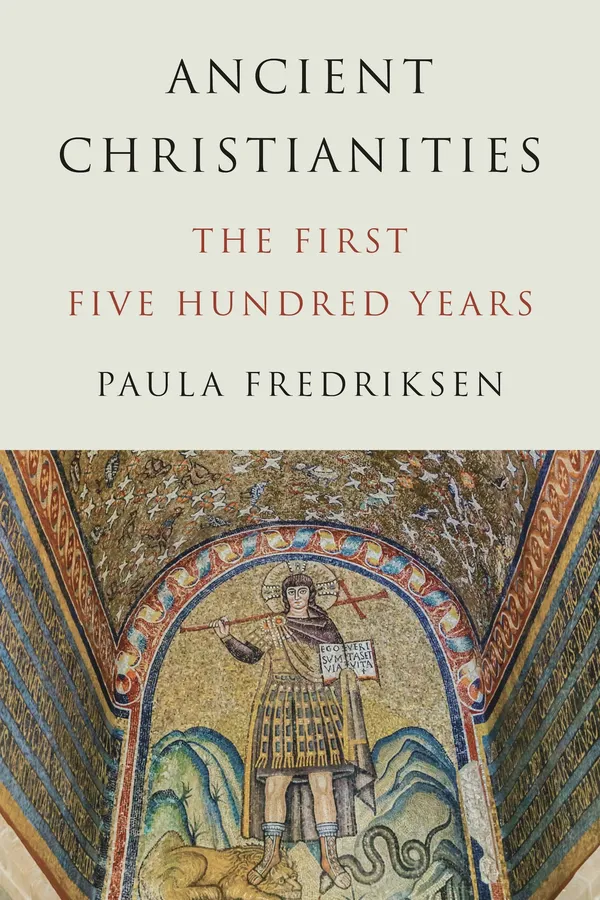
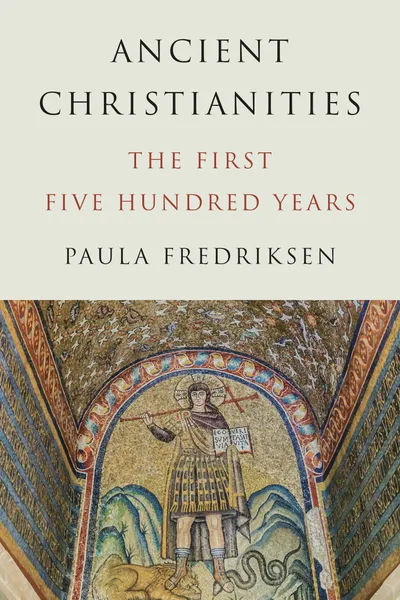
Ancient Christianities: The First Five Hundred Years
Shelves: History, Religion
For fans of: Early Christianity and Second Temple Judaism; revisionist history (good); the social and political aspects of religion
The traditional history told about the birth and early growth of Christianity—from sources spanning antiquity up through today—has largely resembled the “orthodox” telling. This is an insiders’ view of the story, one in which Christianity develops monolithically and inexorably from a single, pure “deposit of faith,” and that ends in the conversion of the entire civilized world under a unified banner (“by this sign you shall conquer” was the divine message which Constantine supposedly received).
Along the way, dissident voices, sects, and communities strayed from the one, true path. Their heresies (which originally meant simply “schools of thought”) were so many failed assaults on the fortress of this unchanging, core belief system. Orthodoxy is a rule and a boundary; and the true, public history of the faith coincided with this narrow line. This, at least, was the story that I learned in college when I studied early Christian history and Patristic theology, and it is still a widely prevailing narrative among faithful and secular alike.
Within the last few decades, however, advances in archaeology, social sciences, and comparative religious studies have complicated this picture in profound and welcome ways. The title of Paula Fredriksen’s excellent new book, Ancient Christianities, signals the monumental shift that is happening in our understanding of the origins of this religion—not just one, but many faiths are the subject of this complex socio- and theologico-historical phenomenon.
From the very beginning, Christianity has been a contested site among many, often divergent beliefs, practices, interpretations, theologies, and communities—all with basically equal justification for their positions. (Heresy, of course, is a word coined by the victors, who claimed for themselves the mantle of orthodoxy, or “correct opinion,” and marked their opponents as deviants.) Fredriken’s is a thematic, rather than chronological, history, which hits all of the classic moments, disputes, and personas of the era, but it does so with the renewed vision of a framework that highlights this diversity. Not only does this make for a far more interesting history, it also uncovers the often-missed social and political realities that went hand-in-hand with disagreements on the finer points of academic doctrine. “Orthodoxy” and “heresy” aren’t inherent ontological categories, but are contingent labels that result from the shifting boundary of power and influence that is always being negotiated.
To mention just one example from the book that has stuck with me: Fredriksen argues convincingly that early Christians practiced and thus legitimated coercion and violence against themselves first, in an effort to mark out communal boundaries of orthodox purity against heresy—a technique which was then quickly turned against Jews and, in the hands of Christianized empire, against the “heathen” other in general. (It’s not hard to see where that led.)
There is at the same time a disturbing persecution/martyrdom complex evident from the very beginning among the loudest and most belligerent voices of orthodoxy. Fredriksen shows how eager some early Christians were to align themselves with imperial power if it meant that their ideological enemies would be crushed. This did indeed have the intended effect, with the added consequence of giving the emperor new avenues for domination via religious coercion. Such a dynamic would never play out in history ever again, and definitely not now!
What this book shows above all is how complex a beginning Christianity had, and how much is at stake in the way we continue to tell its origin story. The ancients saw religion and politics as melded categories, bound together in a web of social and ideological forces, and we would do well to understand that today.
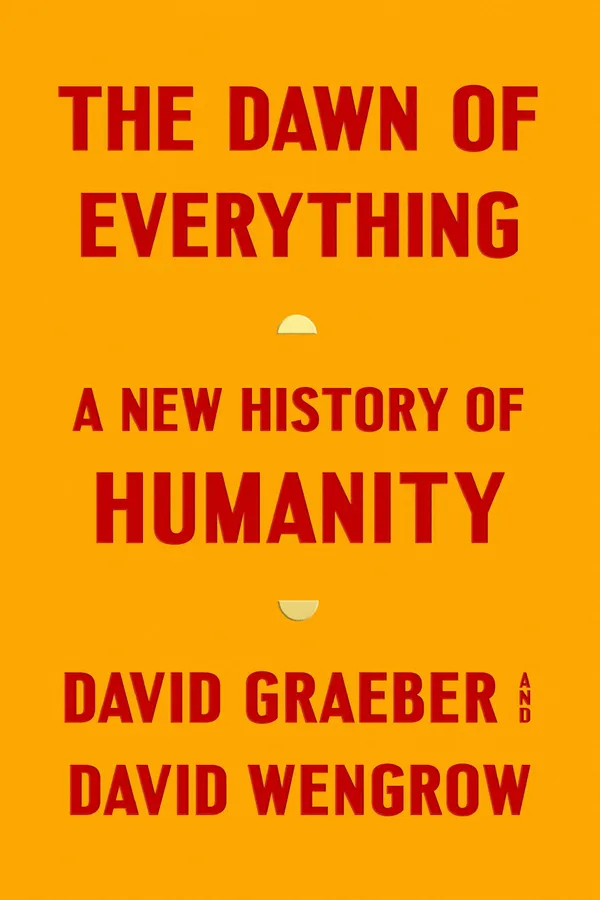
The Dawn of Everything: A New History of Humanity
Shelves: History, Philosophy, Social Change
For fans of: Witty, sharp prose that makes you feel like you’re following a continuously unraveling logical thread; archaeology and anthropology; saying the phrase “what if everything you thought you knew was actually wrong” repeatedly to your friends and family
But why stop at the origins of Christianity when you could go all the way back to the beginning of human history itself? This is the ambition behind David Graeber and David Wengrow’s The Dawn of Everything, which may be remembered as Graeber’s magnum opus after being published posthumously in 2021.
The book is sprawling, enlightening, funny, convincing, exhaustive, exhausting, and, at times, exasperating. It took me about nine months to complete, first through a superb audiobook edition and then with the help of a small but dedicated book club, in part because every page feels like it holds an academic monograph’s amount of information. I’m not sure that I loved it as a whole, although there are plenty of worthwhile sections, especially the first few chapters on critiquing Enlightenment narratives of the human condition. (Honestly, the last third feels skippable?)
Part of the problem is that there is too much going on—as is clear from the introduction by David Wengrow, the book seems to be a repository for the two Davids’ multi-decade collaboration on a number of different topics spanning their fields of archaeology and anthropology. But something more focused soon emerges: as the authors write in the brilliant first chapter, they began with the question, “what is the origin of inequality?” only to confront something much deeper and more interesting to take up—namely, “what assumptions about history and the development of civilization lead moderns to ask this question in the first place?”
This, then, is the book’s most persuasive, critical thesis: the authors deconstruct the nineteenth- and twentieth-century social-scientific “myth” that human beings naturally progressed from small, egalitarian hunter-gatherer bands to large-scale societies dominated by hierarchies, states, and kings. In this telling, we were destined to trade freedom for rule and inequality, but in the tradeoff we reaped the advancements of civilization. (I call this the Sid Meier Civilization Theory of History.)
Against this analogue of the “fall from the Garden of Eden,” Graeber and Wengrow marshal a mountain of evidence to show that, in fact, there is no basis for a Rousseauian “state of nature” or even a vulgar Marxist “stages of history” in the archaeological record. Instead, human beings were always complex animals that exercised choice and existed in ambivalent societies. Even prehistoric humans lived in history. At different times and in different places, they changed social and economic arrangements with the seasons (the authors’ theory on how Stonehenge was built), held slaves and abolished money, and adopted farming or threw it away as a waste of time. Contrary to the prevailing orthodoxies, then, there is no inherent link between history, progress, and social system.
This point underscores what I think is the true meaning of the book. It is a mistake to read this as history per se, not least because the authors often put themselves on shaky footing by extrapolating a bit too eagerly and imaginatively from minimal evidence (queue the exasperating parts). Rather, I think this book is a laudable instance of utopianism—not in the traditional, sci-fi mode of “looking ahead,” but in the less explored mode of ”looking behind.” In a way, this book is the authors’ rebuttal to capitalist realism’s dire pronouncement that “there is no alternative” to our contemporary predicament. With the zeal of their anarchist convictions, Graeber and Wengrow answer by gesturing back at the entirety of human (pre)history. Nothing is or has ever been inevitable, they seem to say, as they show us countless alternative visions of what it means to live and work together.
A final note: both Ancient Christianities and The Dawn of Everything are approachable distillations of academic work from the last 30–50 or so years that is just now appearing as fresh scholarship. What I kept thinking about when reading both of these books is how slowly it takes for ground-breaking research to filter down into popular, everyday understanding. We are only now beginning to understand the importance of discoveries from a generation or more ago. It makes me excited to see someday the fruits of what is now on the cutting edge.
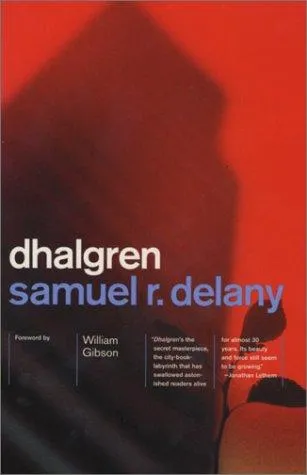
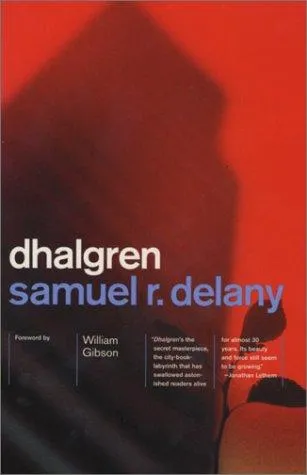
Dhalgren
Shelves: Fiction, Sci-Fi, Theory
For fans of: Being bludgeoned over the head with postmodern theory; poststructuralism and linguistics; experimental fiction; kink
Utopias, Fredric Jameson argues in Archaeologies of the Future, are always ambivalent, often appearing as dystopias if you squint hard enough. This is because utopias are attempts at depicting a rupture out of our current “inescapable situatedness”; apart from any content, they “force us to think the break itself,” to conceive of this violent rupture as the form of Utopia, which pushes back on the notion that “there is no alternative” to present circumstances.
It is one thing to try to enact this kind of utopian vision in a traditional sci-fi or fantasy setting; it is quite another to use the vehicle of the novel itself as the starting point for this experimentation. Enter Dhalgren, a strange, confounding, but mesmerizing work by Samuel R. Delany, who is something like a cross between the god Pan and a precocious beatnik.
As William Gibson writes in the introduction, from the first page, Dhalgren heads straight for the line delineating the contractual boundary between author and reader and ruthlessly, endlessly transgresses it (Delany, evidently, delights in transgression). This is not actually a “sci-fi novel”; according to Delany, Dhalgren is 800 pages of Theory presented in a “fictive mode.” You will immediately find this to be either the most pretentious and tiresome exercise imaginable, or something intriguing and worth exploring, whatever its faults (and there are many). Maybe a bit of both! It certainly provoked a lot of different reactions in our book club.
How do you even write about this book? I won’t bother to summarize the “plot” or characters, only to mention that the book centers around a foggy, shifting, atemporal city that has experienced some sort of apocalyptic disaster—one that has fundamentally altered the fabric of reality. This city is maybe late 1960s “America.” There are maybe ominous astrological portents that recur. Its residents, all mostly adolescents, maybe live in a kind of frozen, post-Sexual Revolution realm of anarchy and libertinism. The book follows the inner experience of (The) Ki(d)d, a mixed-race, cryptic, would-be poet who has no fixed points of identity but exists as a living black hole, a walking assemblage of perceptions and thoughts with a void at his center.
Delany loves to write as a critic of his own work (often playfully under the gender-swapped nom-de-plume of K. Leslie Steiner), and he has mercifully provided some interpretive clues for readers of Dhalgren in an essay entitled, “Of Sex, Objects, Signs, Systems, Sales, SF, and Other Things” (in case you were wondering what the book is all about). Once I read this essay, I stopped reading Dhalgren as a novel and started thinking about it as a text obsessed with inhabiting, and not trying to solve, certain theoretical problems.
Its world revolves around the post-structuralist ideas of Foucault, Kristeva, and Lacan, all of whom Delany was preoccupied with at the time of writing, and it shares with these authors a suspicion of philosphical systems which posit a one-to-one relationship between concrete reality and socio-linguistic meaning. The ambiguity surrounding the aforementioned “maybe”s of the book is calculated technique, driving toward a specific end—one that, Delany maintained, science fiction readers at the time were more equipped to take up and see all the way through. (So it is sci-fi after all!)
Fundamentally, Dhalgren explores the ambivalent fallout that results from this utopian/dystopian rupture of “signifier” from “signified.” As a semiotic proposition, this is like saying, “the map and its symbols no longer correspond to the geography—and maybe they never have in precisely the way we think.” What happens, Delany asks, when this link is broken? What might be gained? What alternatives in human behavior, social structure, and artistic form are possible when suddenly there are no “fixed meanings” in our linguistic universe?
In his essay, Delany critiques a modernist, heteronormative literature which assumes a monolithic “sex act” that molds all of society to its shape. (Sex is a central metaphor and, uh, pastime in Dhalgren.) In this Freudian conception, sex is an ontological given, a fixed point with deterministic meanings that people either take on, repress, or fall short of. Civilization mirrors this ideal and is dependent on it in an absolute way to function.
In contrast, Delany wants to flip the “causal arrows” of this equation: it is instead the particular social arrangements and histories of any given society that shape what sexual expressions are possible in that society—an insight whose logic is then extended to all categories of identity like gender, race, and class. (Characters in the novel are constantly passing as or being misinterpreted as something in all of these categories, showing their inherent fluidity.) For Delany, a society resulting from radical semiotic rupture would necessarily have a sexuality, a politics, and an art also reflecting a kind of radical rupture—which might be both alarming and exhilarating.
In this same vein, Dhalgren is an experiment—radical for the time but in its postmodern register perhaps more intelligible now—in how changing the structure of the social might change the perceptions, experiences, language, and meanings of the world itself. Not only in content, but in form: what remains interesting about this novel is that Delany tries to show what that rupture would be like, with absolutely no prior signposts or guides. He forces us to think the break itself.
This is why the book is so full of layers, fragments, palimpsests, and puzzles (first among them its own title) that are not and cannot be solved in the text. This is how Delany puts it, in his rather tortuous manner:
Kid’s sanity remains in question (and hopefully is never fixed to the circumscribed area of meaning that respectively overshadows the officially “sane” or the officially “insane”) for the same reason the disaster of the city is unexplained: such explanations would become a fixed signified straiting the play and interplay of the signifier—the city of signs—that flexes and reflexes above it. To “clear up” either question … would prevent us from apprehending Dhalgren’s real/true(?) topic: the organizing and reorganizing transformations we are free to view and experience once these restraining models are tossed aside.
So what is it actually like to read? With Dhalgren, the act of reading itself becomes part of the process of understanding it. The book works on you. I felt a lot of things when I picked it up: curiosity, confusion, disgust, desire, boredom, anxiety. At times it was like being stuck in an endless, sordid dream; at other times, it felt like an endless chain reaction of near epiphanies. It occupied my thoughts for many days.
For me it was quite successful, as an experimental text, in unmooring me as a reader from fixed concepts and meanings, forcing me into a kind of existential limbo. In this way I felt like I entered into the predicament of Kid and the autumnal city. Whether or not it is a “good novel,” I can’t really say. But I think I would still take it over Deleuze and Guattari.
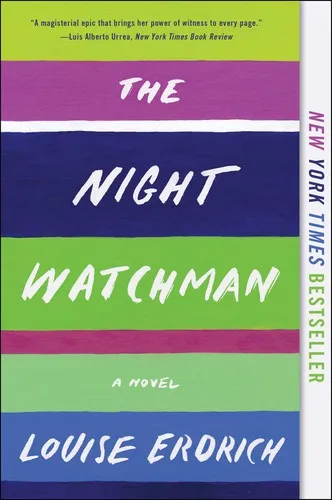
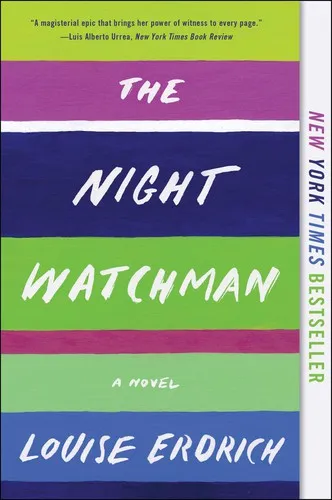
The Night Watchman
Shelves: Fiction, Native American Literature
For fans of: Historical fiction; well-crafted, poetic prose; magical realism; indigenous worldviews
In contrast to the labyrinthine entanglements of Dhalgren, The Night Watchman, a Pulitzer Prize winner, is a perfectly constructed novel. This was my first book by Louise Erdrich, and it is clear that she is a master of the craft. Like other great poet-novelists—such as Boris Pasternak, also on this year’s reading list below—she has a depth and sensitivity that lends a visionary quality to her prose. In Erdrich’s hands, real-world places, events, and people are spiritually expanded, transforming history into communal saga.
The year is 1954, and the setting is the Turtle Mountain Reservation in North Dakota, home of the Ojibwe/Chippewa people. The historical narrative primarily follows the warm and immensely likable Thomas Wazhask, a figure closely based on Erdrich’s grandfather Patrick Gourneau, who is a security guard at a jewel bearing plant. Thomas has just learned about the United States government’s new policy to “terminate” existing Native American tribes then supported by federal resources. While the government claimed this would assimilate indigenous peoples into “real taxpaying citizens,” in practice it meant cutting off services, disavowing the historic sovereignty of tribes, and privatizing formerly protected lands. (Vine Deloria, Jr. remarked that “were an individual citizen to do this it would be classified as cold-blooded murder.”) Thomas is unsettled and immediately sets about trying to rouse the poor, tired community to resist.
The genius of The Night Watchman is that Erdrich presents this not just as a political battle for survival, but as an irreconcilable conflict between two opposing worldviews. On the one hand is the cynical, settler-colonial world of the whites, typified by the conservative Mormon senator from Utah, Arthur V. Watkins, who was the main proponent of the termination policy in real life. This world is cold, disenchanted, self-serving; in Marx’s phrase, it “has left remaining no other nexus between man and man than naked self-interest.” It aims to isolate and divide the tribal peoples, to separate them from each other like good Western, individual subjects. It severs the ties of place and home that inhere between the people and the land, and destroys self-determination out of a desire for profit.
This world is unintelligible to Thomas Wazhask, whose name comes from the heroic muskrat who, in Anishinaabe myth, saved the entire world in an act of self-sacrifice. There is a different spiritual-temporal physics at work in his universe, where everything is animated and connected to everything else. The sacred is not a thing cordoned off in some separate, inaccessible place, but is manifest in every part of nature, in the land itself, easily recognizable to those who are attuned to see it. (One of the book’s most remarkable passages is of a dream Thomas has, outside in the freezing winter night, in which he communicates directly with the unseen world.)
While Thomas is the main focus, Erdrich divides the narrative among many different characters—members of the community, ghostly ancestors, and even animals, all of whom are endowed with the gifts of self-determination and communication. The effect is like a piece of classical music, where each individual part sounds its own melody while slowly building to a profound, graceful, and powerful whole.
Unlike the stereotypical Western narrative, there are no purely evil antagonists in The Night Watchman; even the Mormons can be (barely) sympathetic. There are simply two kinds of spirits at work among the overlapping planes of past, present, and future: those who are lost, cut off from their own roots and purpose, and those who know where they come from and how to find their way home.
The Night Watchman succeeds in telling an important piece of history with direct political relevance today, through a moving narrative of a family and community. And it also shows how an expansive solidarity, one in tune with all of life and the land itself, is one of the most powerful forces in the universe.
Books I Enjoyed but Didn’t Want to Write About
I have run out of words to say anything substantive about these books that I enjoyed, other than that I enjoyed them. Maybe I’ll write shorter reviews of them sometime. I blame Dhalgren for stripping away all of the faculties I had for understanding what a novel is.
Reading Paths
The Social Novel 2 (Book Club)
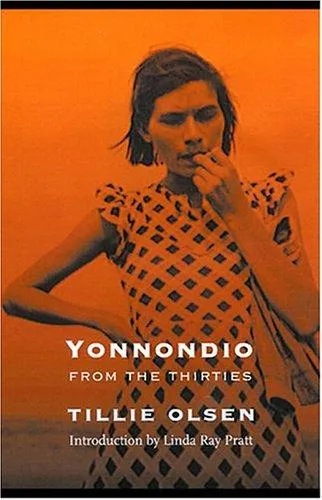
My primary book club continued this year along the path of “the social novel” with books that, each in their own way, deal with social and political themes. It was quite an eclectic collection this year, with stories ranging from the multi-generational struggle of Palestinians for survival (Mornings in Jenin) to the brutality of working-class poverty during the Great Depression (Yonnondio) to the conflict between revolutionary ideals and duty in the Russian Civil War (Doctor Zhivago). I’m incredibly grateful to have such an intelligent and committed group of comrades to read these books with, and I’m looking forward to another year!
“Enchanted” Worlds
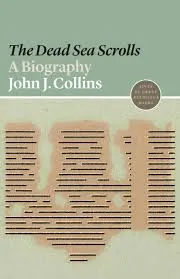
This is a fun collection of books that embodies the Pauline phrase, “for we walk by faith, not by sight.” All of these books are about or have characters who believe in otherworldly forces that animate and direct events among the visible world. These forces can be ominous and paranoia-inducing (Foucault’s Pendulum), apocalyptic and prophetic (The Dead Sea Scrolls), or demonstrative of a poetic gratuitousness which stands in opposition to the iron laws of history (Doctor Zhivago). In every case, there are more things in heaven and earth than are dreamt of in our philosophy.
Hard-Boiled Fiction
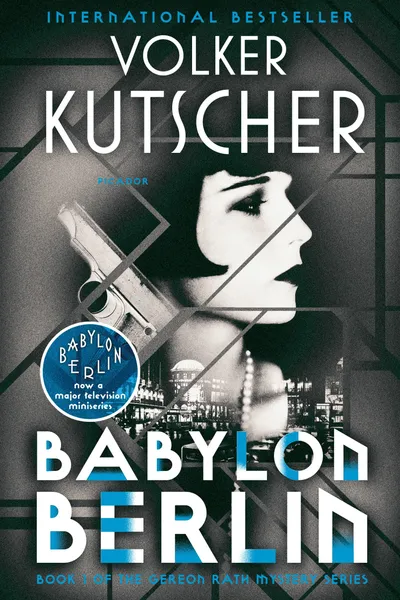
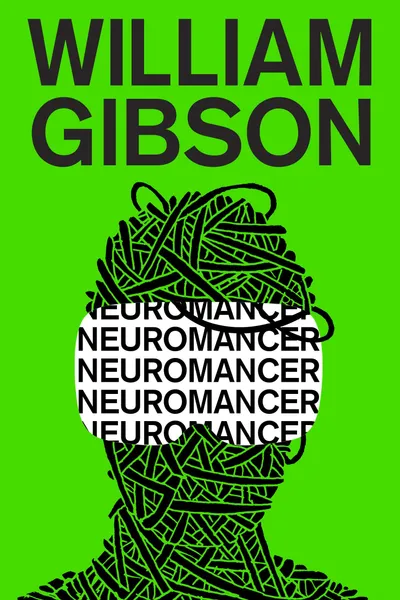
Standing as a (perhaps subconscious) rebuttal to the previous category, these novels are firmly grounded in the mundane, sordid reality of the kingdom of this world, even if extrapolated into the future (Neuromancer). There is a feeling of claustrophobia in all of these books, as if life is aware of death encroaching on more and more of its domain. For all that, these are all absorbing, well written stories.
2025 Reading Stats
Compared to the previous year (in parentheses), I read less books over a longer period of time, but curiously kept my page per day average almost exactly the same (again, I blame Dhalgren):
- Books read from: 17 (-30%)
- Books finished: 12 (-15%)
- Unique authors: 17 (-21%)
- Average reading time (finished books): 10 weeks
- Pages read: 5,838 (-0.1%)
- Pages per day: 15.9 (-0.6%)
If you liked this post, consider showing your support with a small tip or coffee. This goes a long way toward fueling more of my reading and writing, and it is much appreciated!